On 12 November, the Bank of Ghana unveiled the Ghana Heritage Series (opens in a new tab), a fresh set of smaller cedi notes, harder to fake and, for the first time, covered in Adinkra symbols.
Governor Dr Johnson Asiama says the notes should give us a renewed sense of pride in the cedi, and after everything the cedi has been through with the dollar, a glow-up was the least we could do for it.
Before you start forming with crisp new notes, though, they only enter circulation on 1 December, and your old notes are still legal tender, so nobody should be rejecting your tired GH¢20 just yet.
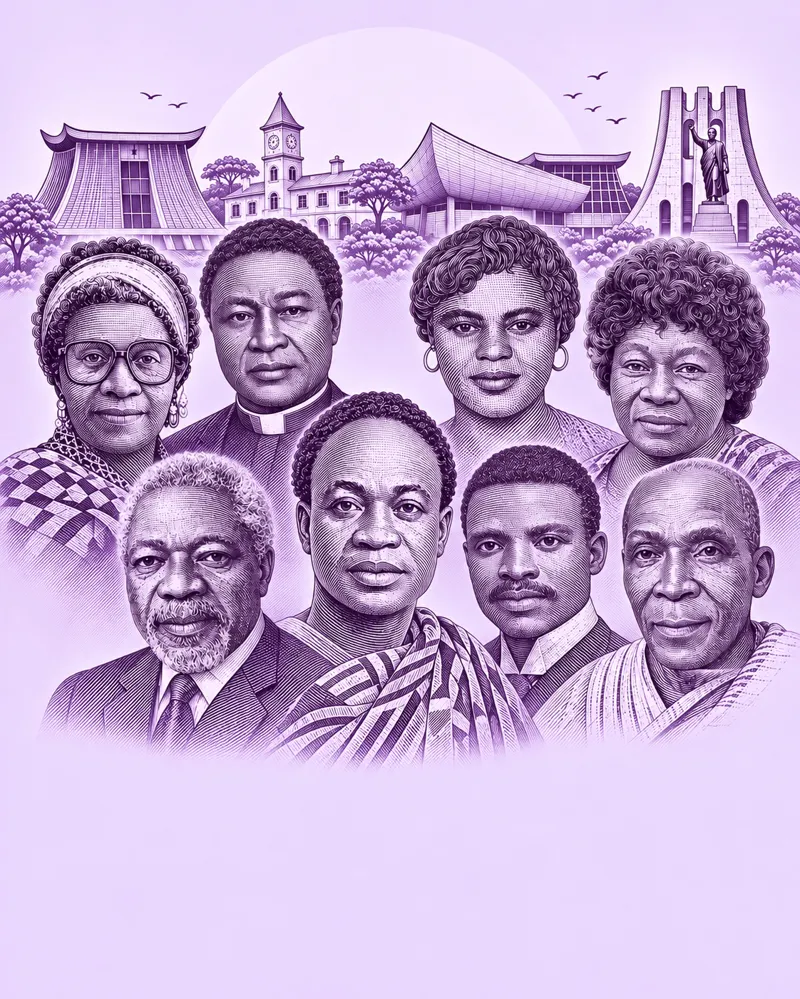
Every note now carries a theme, and some of the faces are people many of us only half-remember from social studies. So here is who they actually were, and why they ended up on your money.
GH¢1: Agnes Oforiwa Tagoe-Quarcoopome (Commerce)
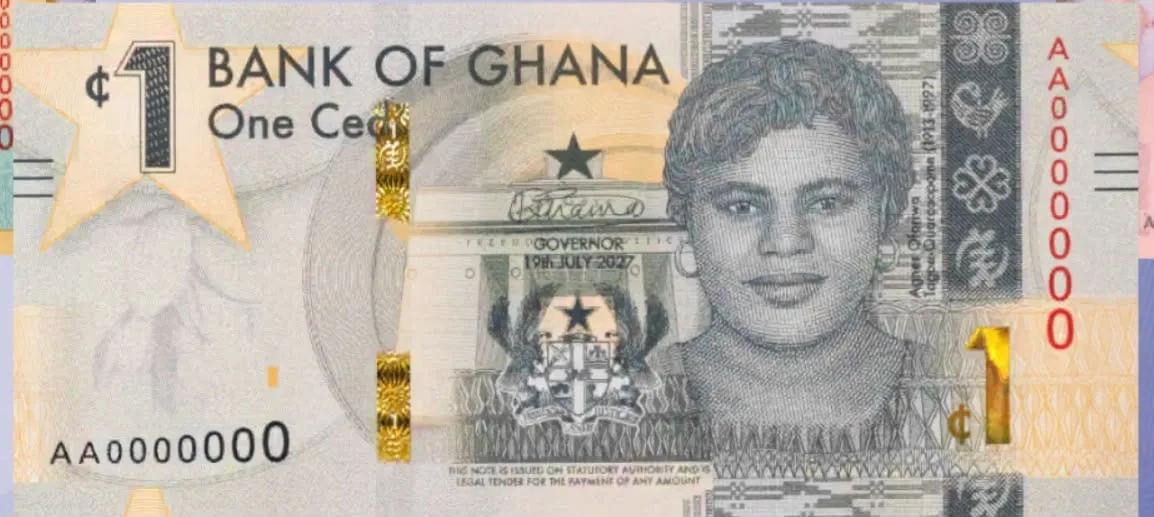
Before there was a Makola you could find on Google Maps, there was Auntie Oforiwa. Born in 1913, she started trading as a young girl in the 1920s, went on to own shops in Makola and Okaishie, and by 1940 she was one of the best-known market queens in the country.
When the CPP formed in 1949, she mobilised market women to fund Kwame Nkrumah’s campaign and organised meetings for him right there in the market; so much of the independence struggle was paid for with money from women like her.
In 1958, she became the first Ghanaian trader to visit the head offices of the United Africa Company in the UK and the Netherlands. She died in 1997, and now she sits on the GH¢1 note that works hardest at Makola.
GH¢2: Cardinal Peter Porekuu Dery (Religious Freedom)
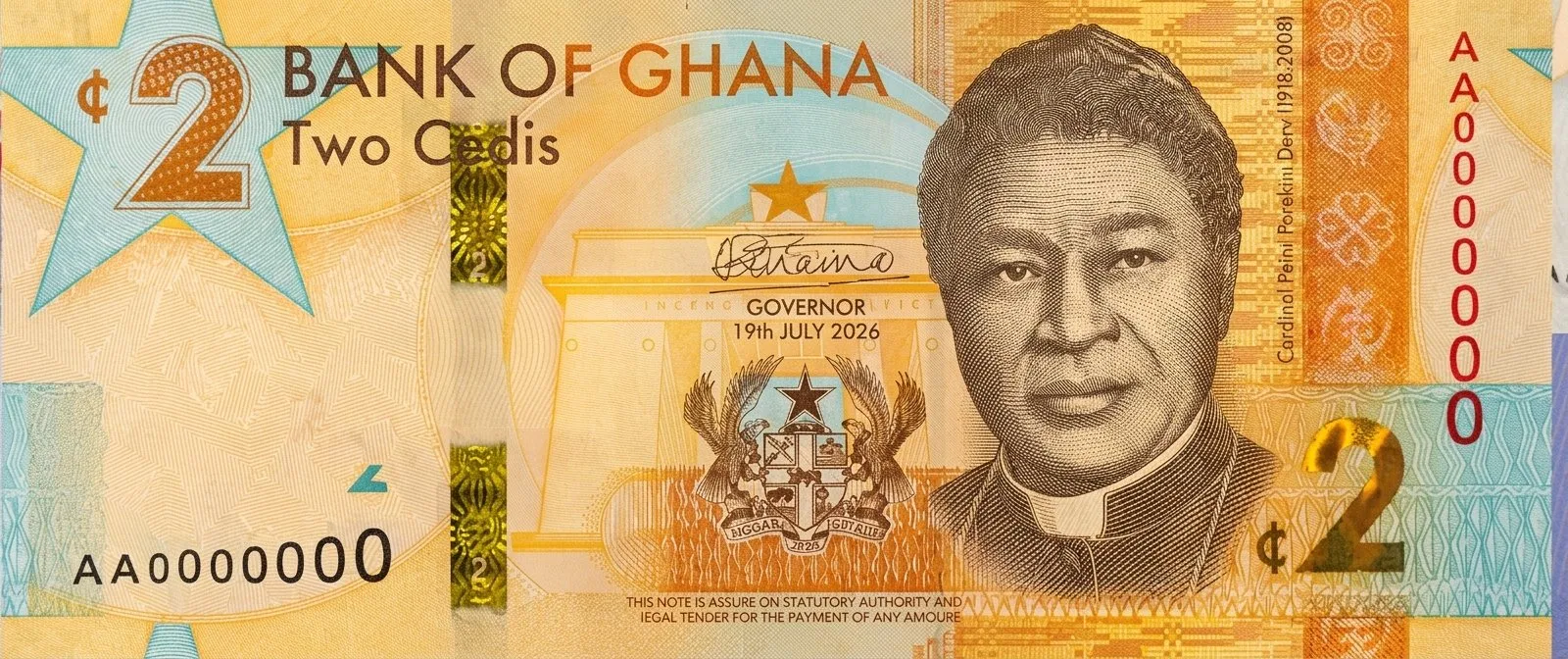
Born in 1918 at Zemuopare in the Upper West, Peter Porekuu Dery was ordained a priest in 1951 and became the first Bishop of Wa in 1960.
When Tamale became an archdiocese in 1977, he became its first Archbishop, and he founded schools and a minor seminary across the north.
He also brought local language, music and culture into Catholic worship long before it was common.
In 2006, at the age of 87, Pope Benedict XVI made him a cardinal, and he died two years later.
His note carries the Adinkra symbol Nyame Dua, which the launch video said represents “Ghana’s indigenous spiritual heritage”, a fitting pairing for a man who spent his life bringing faith and Ghanaian culture together.
GH¢5: Dr James Emman Kwegyir Aggrey (Education)

Born in Anomabu in 1875, Aggrey studied and taught in the United States before returning home to help start Achimota College.
He became its first Vice Principal in 1924, and he persuaded Governor Guggisberg to admit girls as well as boys.
He is widely credited with the line about educating a woman and educating a nation. The GH¢5 note puts him on the front with Achimota School on the back, making it the only senior high school on any Ghanaian note.
The Adinkra symbol is Nea Onnim No Sua A Ohu, which stands for knowledge and learning. Motown alumni, the floor is yours.
GH¢10: Justice Annie Jiagge (Justice and Equality)
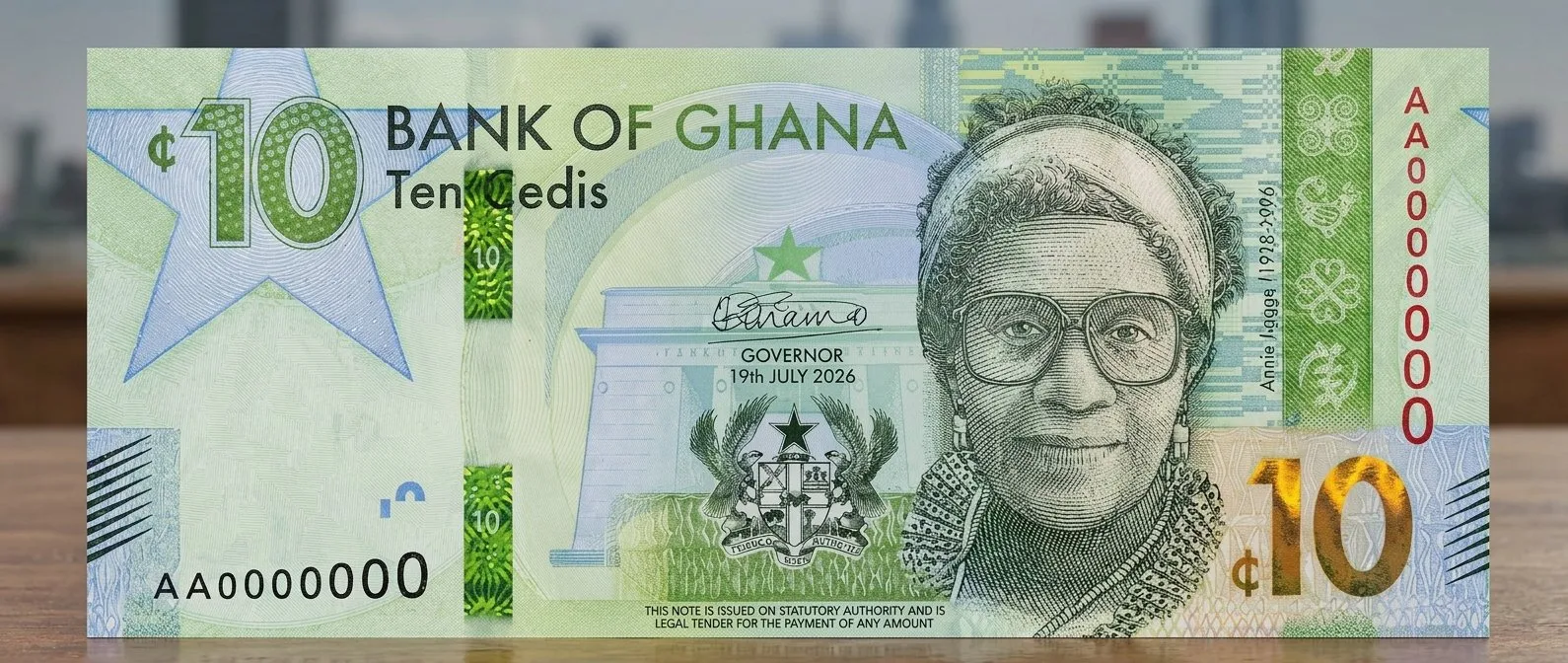
Born in Lomé in 1918, Annie Jiagge became Ghana’s first female lawyer when she was called to the Bar in 1950, and in 1959 she became the first woman in Ghana and the Commonwealth to become a judge.
Ten years later, she became the first woman on the Court of Appeal, then the country’s highest court. Her influence went far beyond Ghana, because she was the main drafter of the UN Declaration on the Elimination of Discrimination against Women, and she co-founded the organisation that became Women’s World Banking.
She died in 1996, and the GH¢10 pairs her with Epa, the Adinkra handcuffs that stand for law and justice.
GH¢20: Dr Ephraim Amu (Arts and Entertainment)
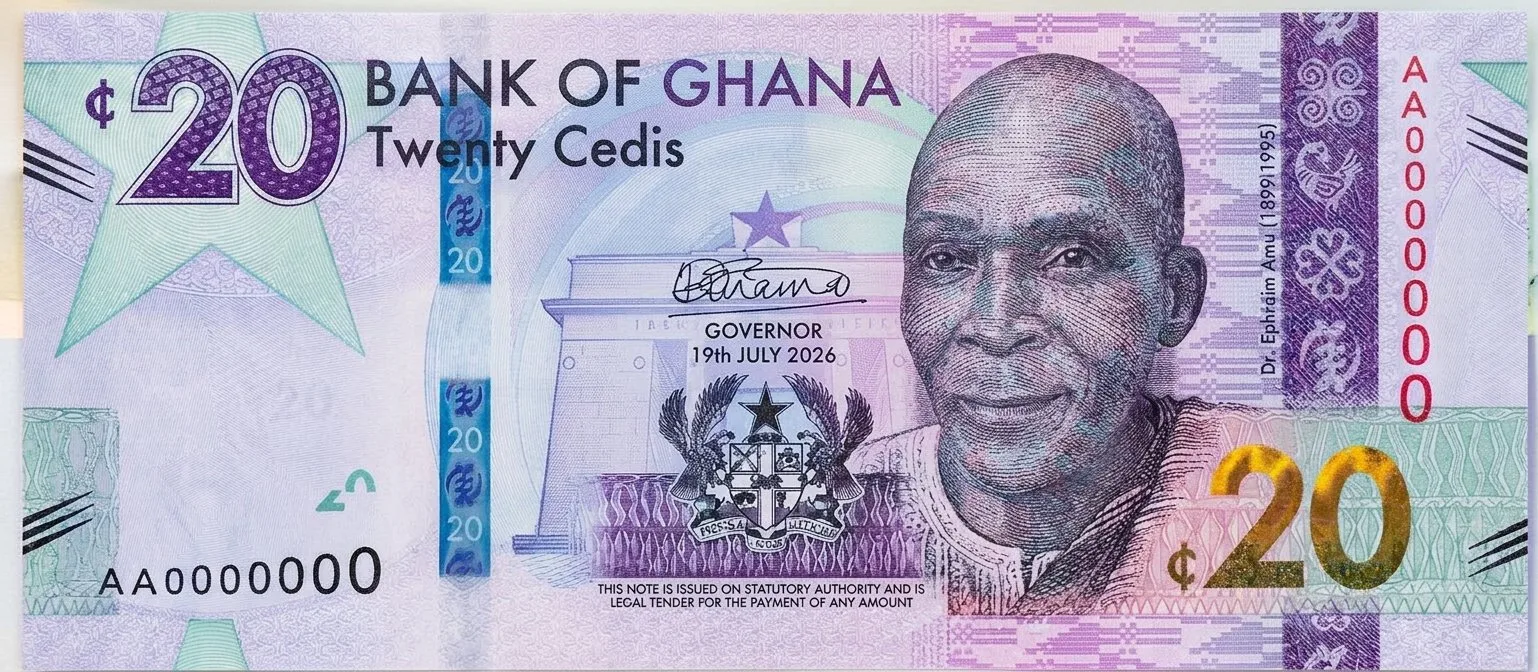
Every time you sing “Yen Ara Asaase Ni”, you are singing Ephraim Amu. Born in Peki-Avetile in 1899, he once walked about 150 miles from Peki to Abetifi to begin teacher training, and he grew into the composer who gave Ghana some of its most loved patriotic and church songs.
He championed the atenteben, the bamboo flute, at a time when Western instruments were seen as superior, and he helped establish the school of music at the University of Ghana.
This is actually his second time on a cedi note, since his portrait appeared on the old ¢20,000 note before redenomination in 2007.
He died in 1995, and his new note carries Dono, the Adinkra symbol inspired by the talking drum.
GH¢50: Theodosia Salome Okoh (Nationalism)
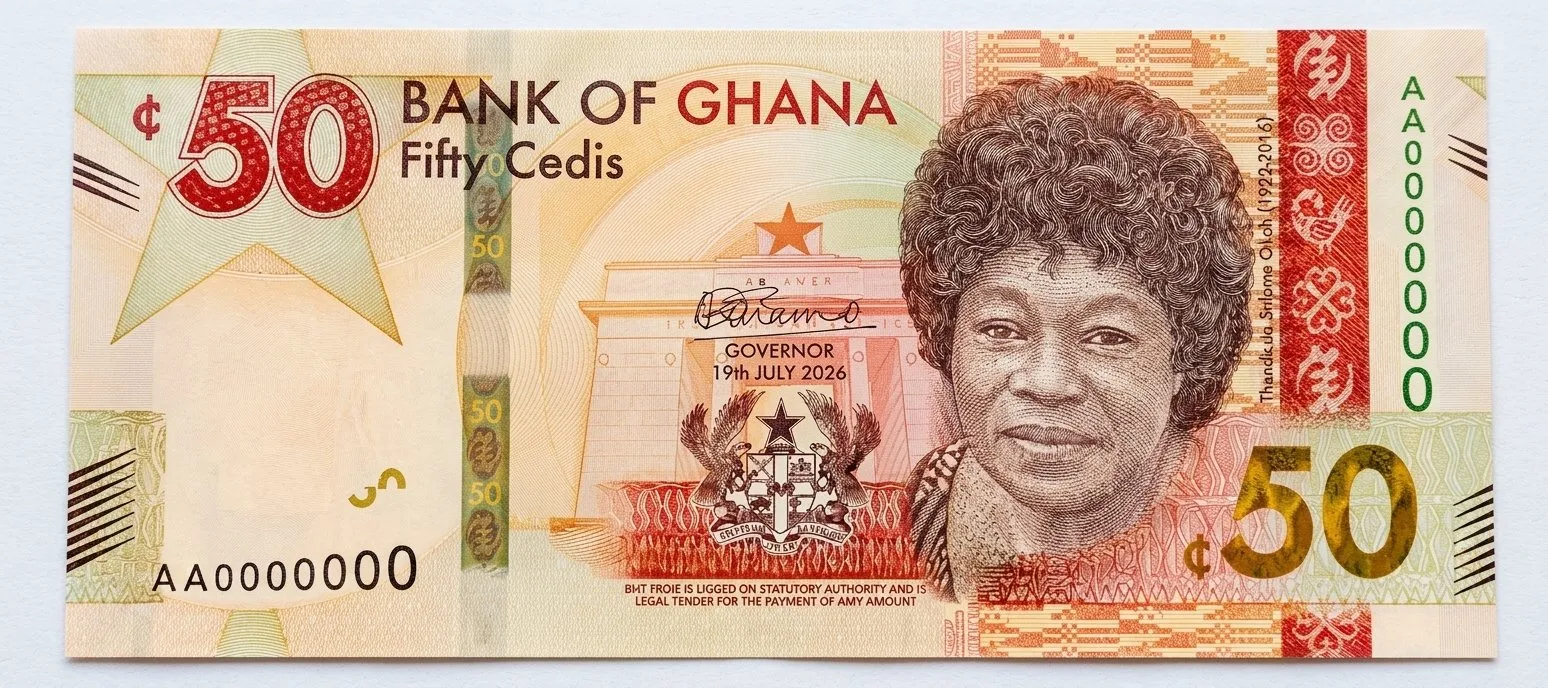
The red, gold, green and black star you wave at every Black Stars match was designed by Theodosia Okoh in 1957.
In her design, red stands for those who died or worked for independence, gold for the country’s mineral wealth, green for its rich vegetation, and the black star for African freedom and unity.
She was also a teacher, an artist and a sportswoman, and for more than 20 years she led hockey in Ghana as the first woman to chair the Ghana Hockey Association.
The GH¢50 carries Fawohodie, the Adinkra symbol for freedom and independence, under the theme of nationalism.
GH¢100: Kofi Annan (Peace)
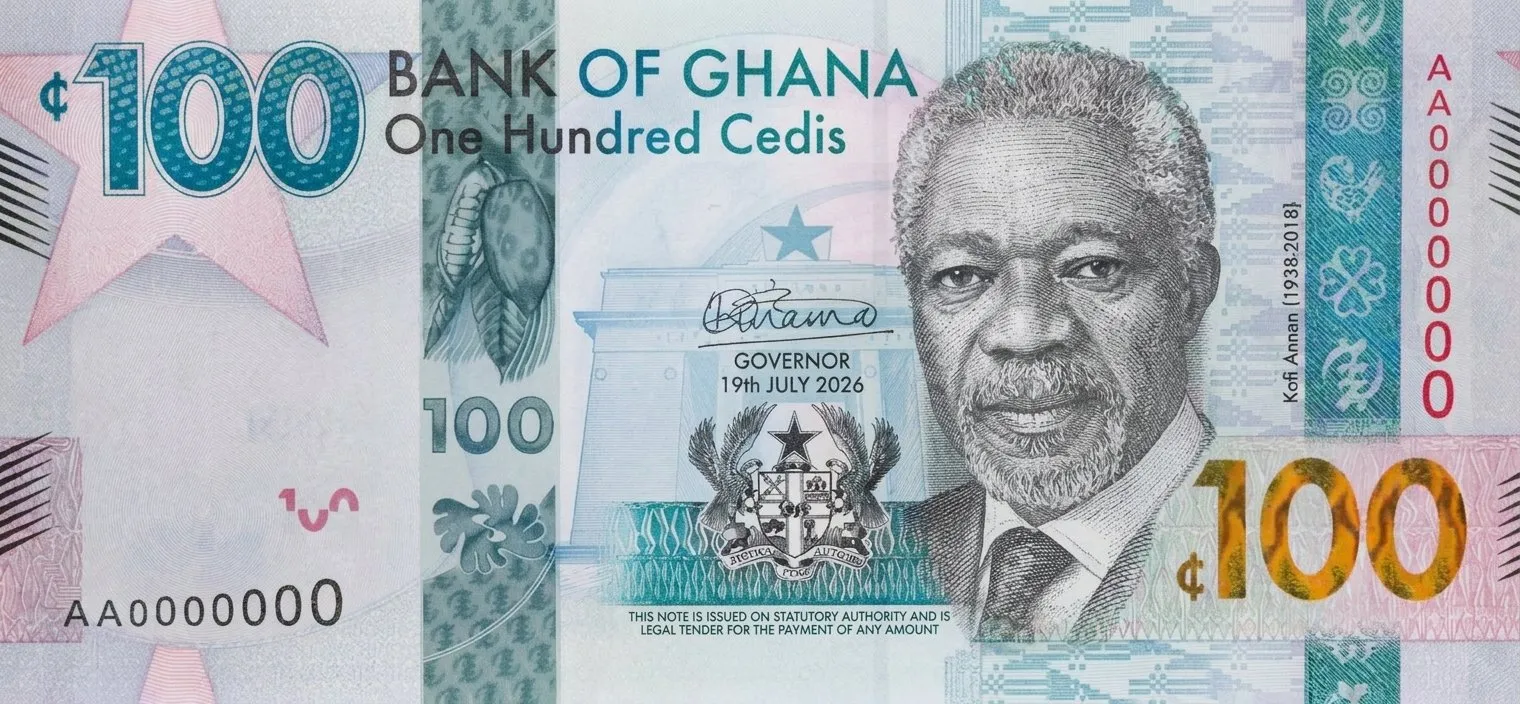
Born in Kumasi on 8 April 1938, Kofi Annan became the seventh Secretary-General of the United Nations in 1997, and the first to rise from the ranks of UN staff.
He led the organisation until 2006, and in 2001, he and the UN were jointly awarded the Nobel Peace Prize.
He died in Switzerland in 2018. His note has the Kofi Annan International Peacekeeping Training Centre on the back and the Adinkra symbol Bi Nka Bi, which stands for peaceful coexistence.
Considering how much we fight in the comments, we should all study this note carefully.
GH¢200: Sovereignty
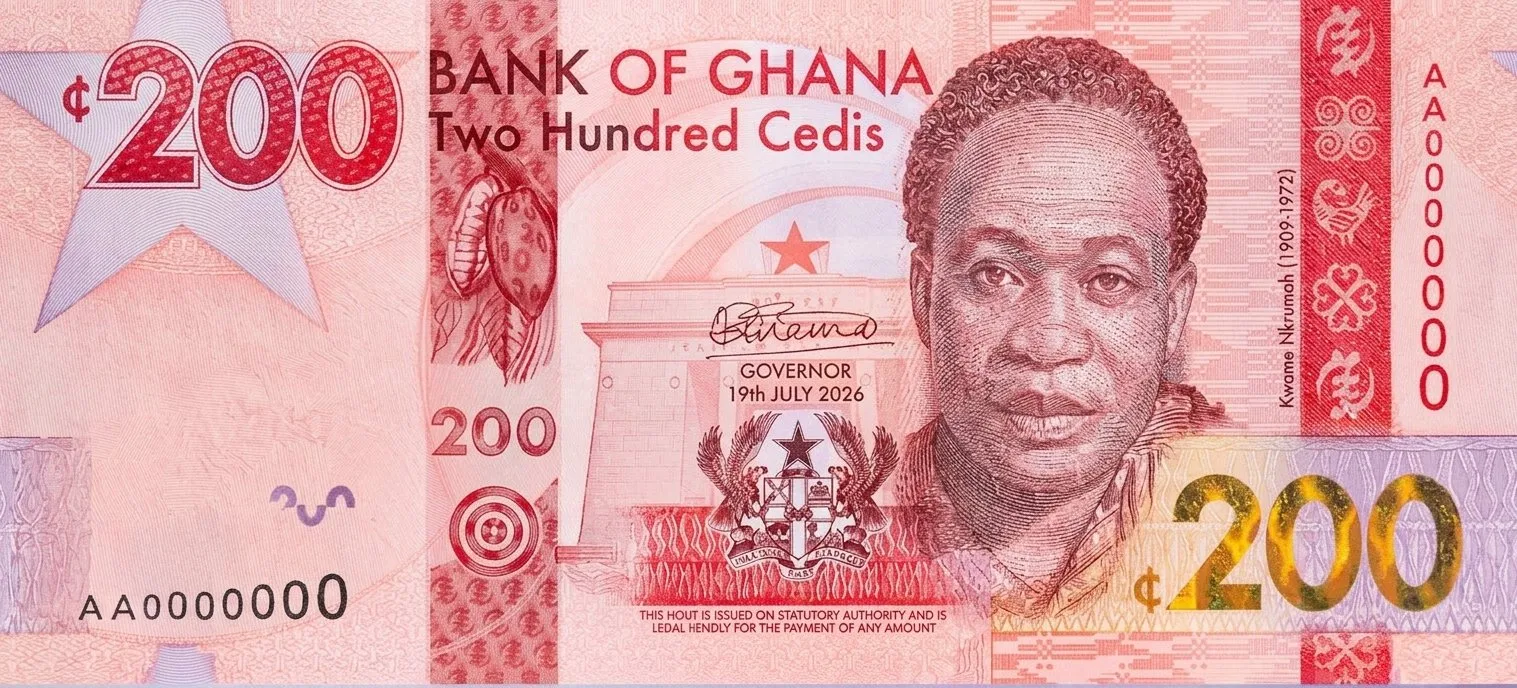
The only member of the Big Six to survive the redesign is the man who led Ghana to independence on 6 March 1957.
Kwame Nkrumah, Ghana’s first Prime Minister and later its first President, sits on the front of the GH¢200 note, the biggest denomination, with the Kwame Nkrumah Memorial Park, where he is buried, on the back.
The Adinkra symbol is Adinkrahene, the chief of all Adinkra symbols, which stands for leadership, and the launch video said the note honours “the vision and resolve” that helped secure Ghana’s independence.
So, have you found your favourite face yet? Tell us which note you are most excited to spend in December.