


Your mother told you to eat your vegetables, and you pushed them around the plate and hoped she would not notice, which was not unusual for a Ghanaian child in the 1990s, because the vegetables were often not the point.
What she did not tell you, because nobody had thought to say it yet, was that the vegetables on that plate had no real home in the formal market.
Ghana grew fresh produce, it always had, but nobody was packaging it properly, nobody was preserving it after harvest, and the supermarkets that were beginning to open across Accra were stocking imported dried herbs in containers from overseas because there was no local supplier who could walk in off the street and meet their standards.
The gap was not in the soil. It was in everything that happened after the harvest, the packaging, the storage, the presentation, the supply chain that connects a farm to a shelf, and in 1997, that chain did not exist in any formal sense in Ghana.
Catherine Krobo Edusei was about to build it, though that was not what she thought she was doing when she landed back in Accra in 1996.
She had spent fourteen years in Britain, working in banking, studying business administration at Camden College, and raising a family that from the outside looked settled, and when she came home she was recently divorced, alone with two young children, and certain of one thing above everything else, which was that she was not going back into formal employment.
She needed to be present for her children in a way that a banking career, with its hours and its demands and its particular relationship with your time, would not allow, and she had told her family as much before she got on the plane.
“I went into farming out of a need. Because I was a single mother, I did not want to go back to a formal work environment.”
The idea itself arrived by accident, the way the most consequential ideas often do. She had been investigating an opportunity to grow aloe vera commercially and asked her sister-in-law in the UK to send her some literature on the plant. What arrived instead was a book about growing vegetables and herbs, and when she read it she realised she could not find in Accra a single thing it described, not the herbs she had cooked with in London, not locally packaged fresh vegetables, not any of it. She started growing herbs on a leased family plot with her own savings, packaging them the way she had seen done in Sainsbury’s and Tesco, and in 1997 she walked into Kwatsons, the only supermarket in Accra at the time, carrying a tray of fresh dill, fennel, coriander and basil.
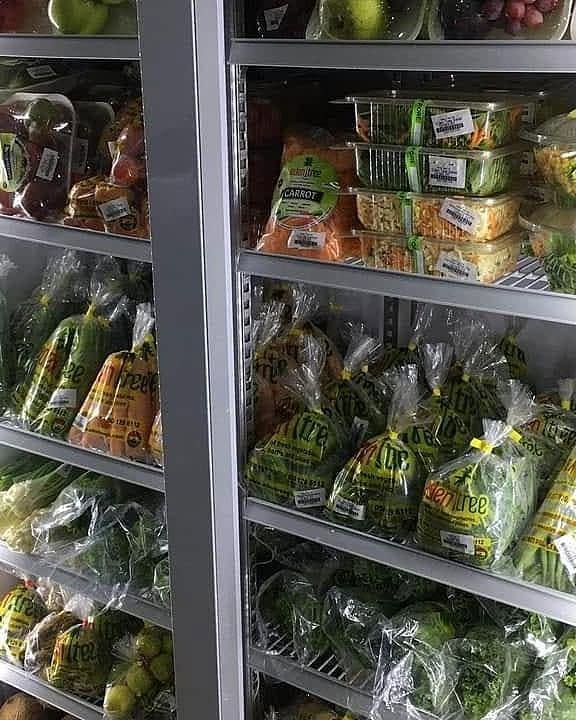
The manager had never seen anything like it. He would put them on the shelf, he said, and if they sold he would pay her, and if they did not she should come and collect them. They shook hands on it.
READ MORE: The women who took the controls: Melody Millicent Danquah and Ayele Kome Ghana’s first female pilots
The stock was gone by the following day. It was not Ghanaians who bought it but the expatriate community, diplomats, aid workers and foreign businesspeople who had been living in Accra for years without the ingredients they cooked with at home, and who had been waiting, without quite knowing they were waiting, for exactly what Krobo Edusei had just walked through the door with.
The manager agreed to regular consignments. Eden Tree had its first account.
What followed was not fast or comfortable, and Krobo Edusei has never pretended otherwise. It was five years before she paid herself a salary, with all the profits going back into the company, and the banks, which viewed agriculture as too high a risk to lend against, were not interested in helping her grow. There were moments when the business came close to folding entirely, when the gap between what she needed and what she had was wide enough to end the whole thing, and she held on anyway, expanding from herbs into vegetables, then spices and fruit, establishing partnerships with smallholder farmers across the country and providing them with soft loans to improve their production and buy inputs.
“We are the bridge between smallholder farmers and the stores. We understand the language of the supermarkets, so we are able to transform their produce into something that is acceptable to the stores.”
That translation, from field to shelf, from what a farmer could grow to what a supermarket chain would accept, turned out to be the thing Ghana’s formal food sector had been missing, and as new supermarket chains opened across Accra, Eden Tree was already there with the supplier relationships, the processing capacity and the quality standards to fill them. The company reduced post-harvest losses through better handling and storage, lowered the cost of fresh produce for consumers by sourcing locally rather than importing it from thousands of miles away, and created stable, reliable income for hundreds of farming families who had no route to formal retail before Krobo Edusei built one.
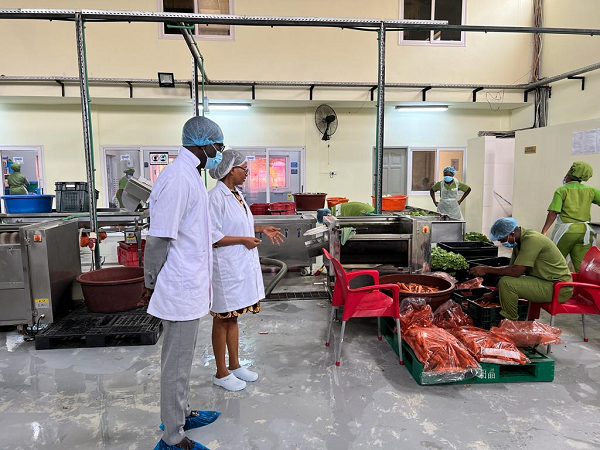
When Investisseurs & Partenaires, a French impact investor, took a stake in the business in 2015, Eden Tree had already proved the model, and the investment gave Krobo Edusei the capital to professionalise the operation, build a processing facility in Tema, and scale what had started on a leased family plot into one of Ghana’s most recognised food brands.
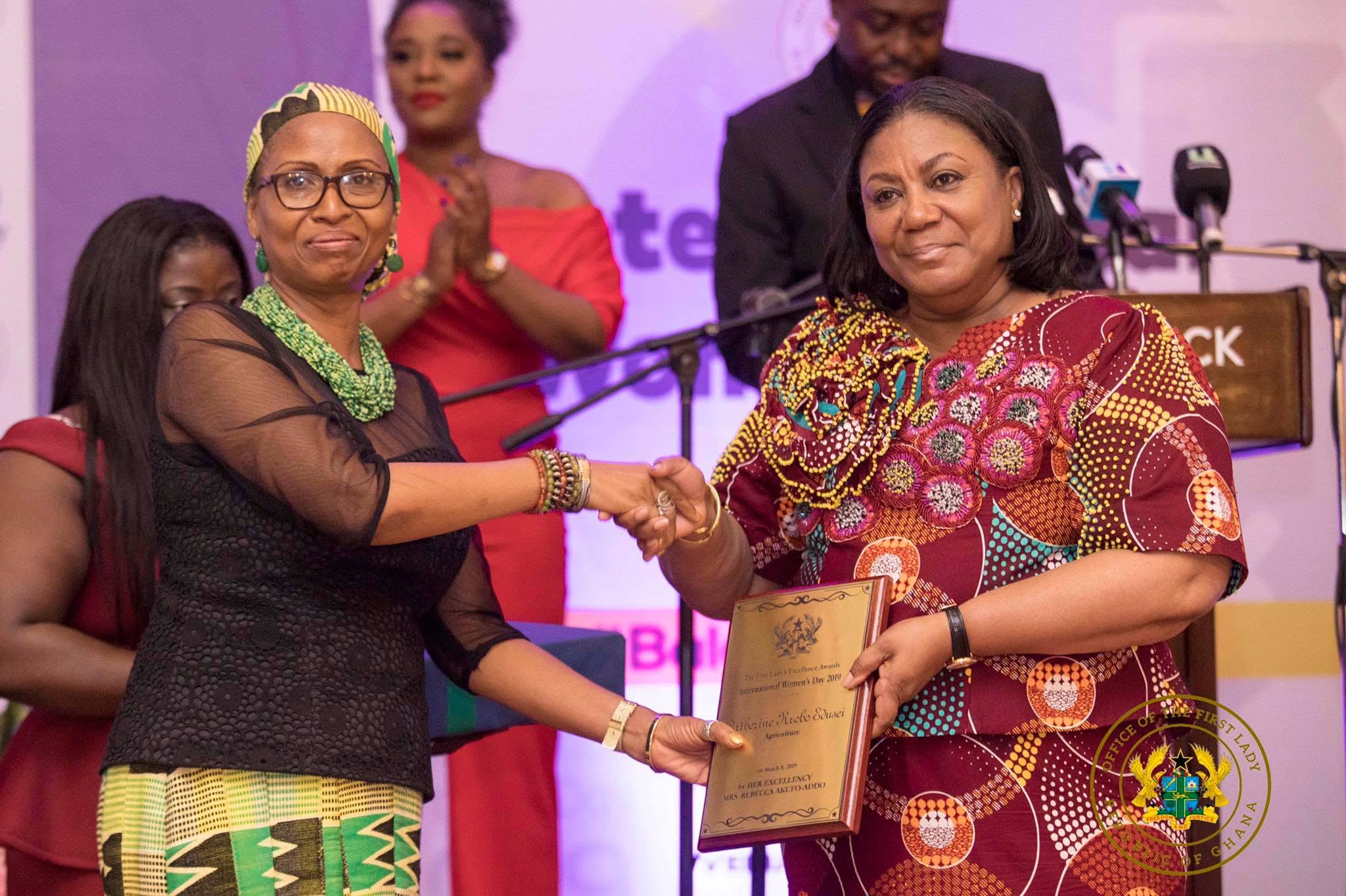
She won Ghana’s Agribusiness Entrepreneur of the Year in 2013 and again in 2015, a national award from the Chartered Institute of Marketing for outstanding contribution to nation-building, a Lifetime Achievement Award for promoting urban farming in Ghana, , recognition from the Chamber of Agribusiness Ghana, the Association of Ghana Industries, SME Grow Africa, the Africa Women’s Leadership Academy and the First Lady’s Excellence Award on International Women’s Day in 2019.
The business today works with more than 375 outgrower farming families, supplies over 80 varieties of fresh produce to 12 supermarket chains in Accra, and runs three business channels: fresh produce, a convenience foods division supplying cut vegetables and ready-to-eat salads, and a fruit juice line, all of it operating from a processing facility in Tema that did not exist before the French investor arrived and helped her build it.
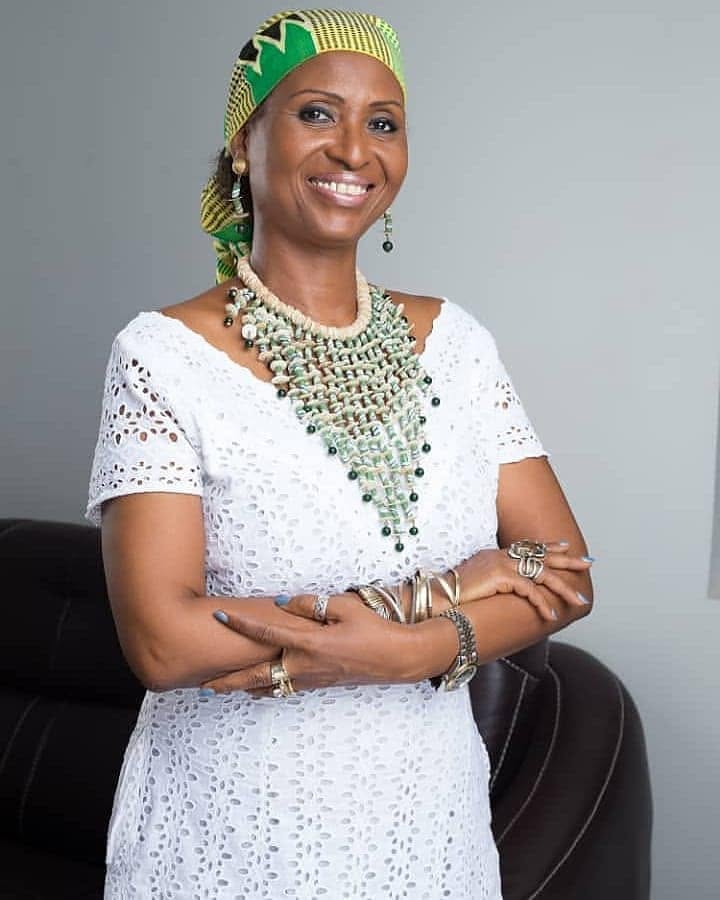
This year, Krobo Edusei sold majority control of Eden Tree to Pangea Africa and Black Star Africa, two firms with complementary expertise in West African food systems and supply chain work, and the transaction also bought out I&P’s decade-long position in what the parties have described as one of the few secondary exits of its kind completed in West Africa without an international trade buyer anchoring the deal, which they presented as evidence that Ghana’s financial ecosystem can now structure and close transactions of this complexity entirely on its own terms. The transaction value was not disclosed. Krobo Edusei moves to founder emeritus and keeps a board seat.
She is 29 years from the supermarket manager who did not know what herbs were, and the stock that sold out before he could call her back.